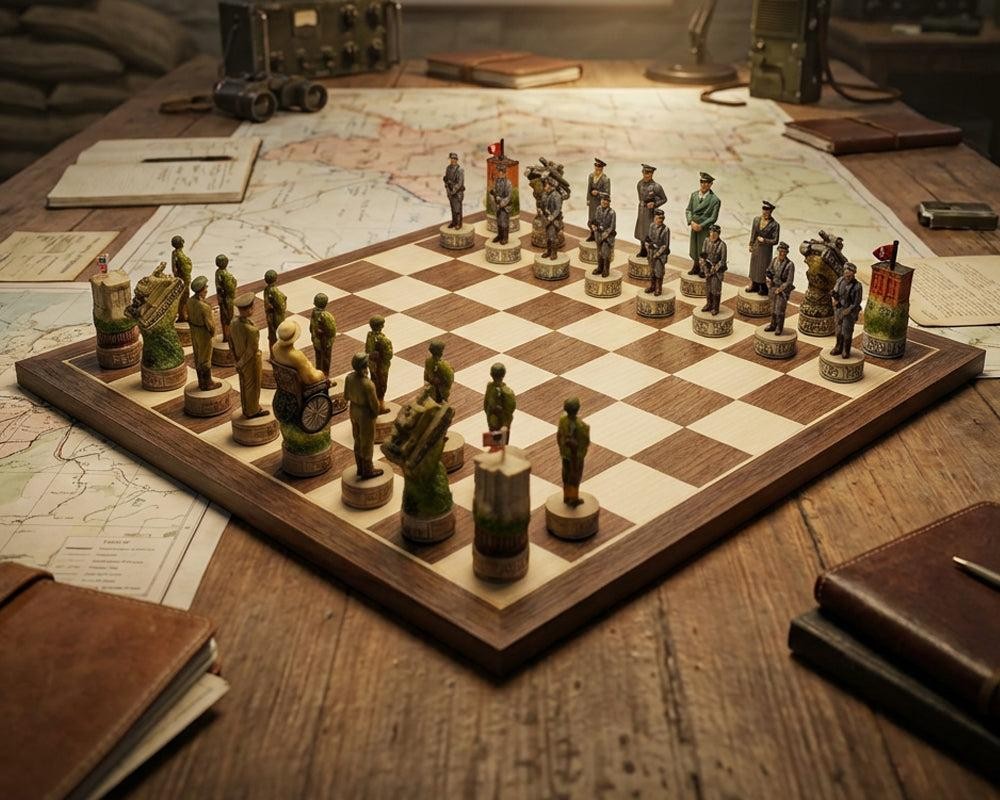
This is the deep-tactics guide: phase analysis and concrete board cases for Classic Original play. If you want a short beginner checklist instead, start with Tips—then return here for opening probes, Marshal protection, Miner endgames, bluffs, and trades.
Updated 2026-11-1518 min readClassic Original focus
Strategy is planning under uncertainty: every revealed piece and every quiet square updates the picture of the board.
Reading path: New players should finish the Tips checklist first. This Strategy page assumes you already know not to burn the Marshal and last Miner casually—and then shows longer examples of how that looks on the board.
Opening — probe without burning elites
Early turns should buy safe information. Use Scouts on open lanes, probe with mid-ranks, and avoid revealing the Marshal without a plan. Note which enemy pieces refuse to move—immobile candidates matter.
Good opening
Open one Scout lane, test a quiet piece with a Lieutenant, and keep Miners behind the front until Bombs are more likely.
Weak opening
Reveal the Marshal early, spend every Scout in the first ten moves, and leave no Miner for the Flag screen.
Practice starting layouts on the Setup Guide boards before committing to a style.
Midgame — convert info, protect the Marshal
Convert discoveries into territorial pressure. Clear known Bombs with Miners, trade when the exchange improves your Flag hunt, and keep at least one elite ready to punish overextensions.
Endgame — Miners decide Flag access
When few movable pieces remain, Flag geography dominates. Preserve Miners, track remaining Bombs, and avoid giving free Scout paths into your last defensive squares.
Bluffing — sell a fake Bomb, hide a real Scout
Bluffs work because pieces look identical until revealed. A stationary mid-rank can mimic a Bomb. A Scout that stops after one step can look like a higher officer. Do not bluff so often that patterns become readable.
Information management — log before you spend
Every attack is a trade of knowledge. Ask whether the revelation is worth the piece. Write mental notes: confirmed Bombs, likely Spy corridors, and pieces that behaved like Scouts.
Piece trading — never sell the last Miner cheap
Equal trades can favor the player closer to cracking the Flag. Trading your last Miner for a Captain is often a disaster. Trading Scouts for Scouts is usually fine if it clarifies a lane.
Risk management — Marshal vs Spy corridors
The Marshal is powerful and fragile against the Spy. High-rank aggression without Spy awareness is a common losing pattern. Prefer forcing the opponent to move first into contested squares when the unknown piece could be catastrophic.
 Stratego Game Wiki